Farsangi fánk
Carnival Doughnuts- Yield
- About 12 doughnuts
- Active
- 1 hour
- Total
- 3 hours 15 minutes
- Difficulty
- Medium
The story
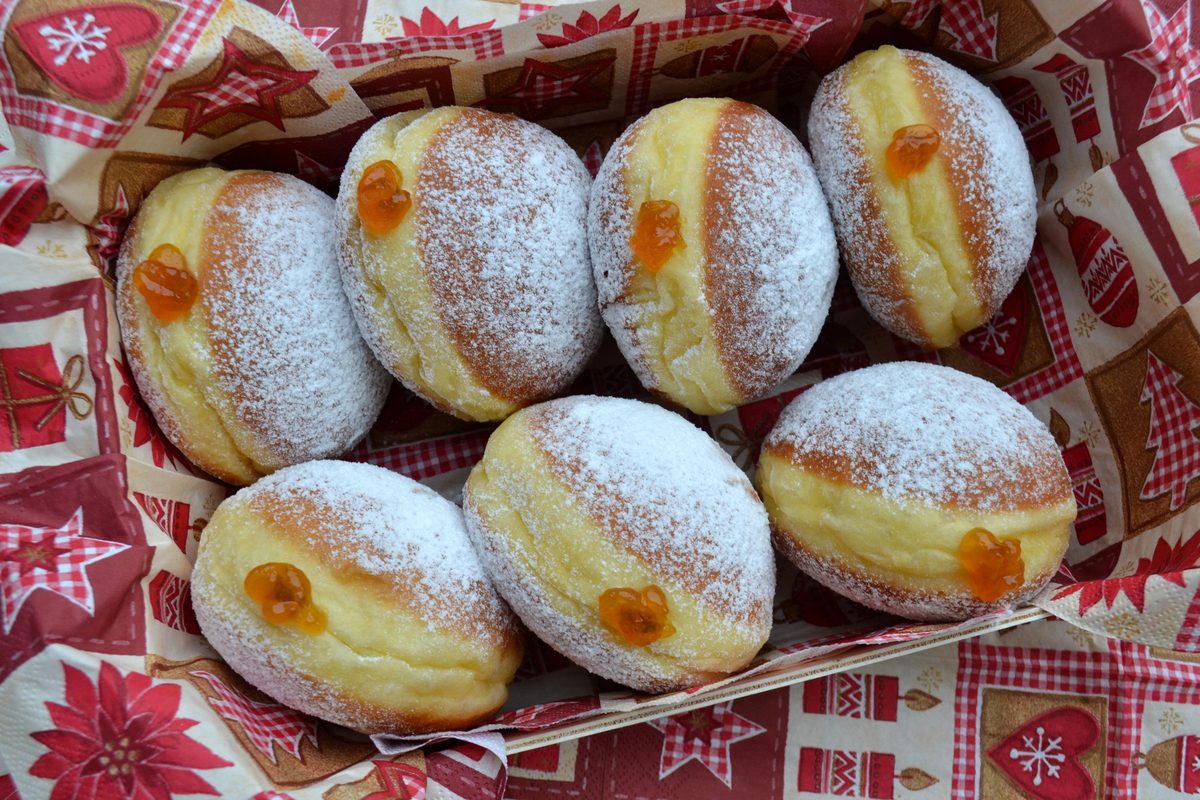
Farsang, the Hungarian Carnival season, runs from Epiphany on January 6 to Ash Wednesday, which falls on February 10 in 2027. It is a time of masquerades and balls meant to drive out winter and welcome spring, and in Mohács it is marked by the Busójárás, when masked busó figures parade to chase the cold away. Fried dough is the food of the season, and the farsangi fánk is at its center: a soft yeast doughnut enriched with egg yolks and butter, fried in a covered pot on its first side and uncovered on the second. When it goes right, each doughnut rises with a pale band around its middle where it floated above the oil, which gives it the name szalagos fánk, ribbon doughnut. Many cooks add a splash of rum to the dough, which is said to keep it from soaking up oil. The doughnuts are dusted with powdered sugar and topped, not filled, with a spoonful of apricot jam. Hungary's Carnival also has a coda after it ends: Torkos csütörtök, Gluttonous Thursday, the first Thursday after Ash Wednesday, which falls on February 11, 2027. Fánk are best within hours of frying, so start the dough about three hours before you plan to serve them.
This recipe contains alcohol. It is meant for adults of legal drinking age.
Ingredients and method
The full recipe, with US and metric measures and stand-ins for hard-to-find ingredients, is part of the Winter Folk Dishes edition. Buy it once and keep the PDF.
Want to try first? Gulyásleves is free to cook.
Compared with
- Sweet Masks and Sugary Ribbons: A Food Lover's Guide to Hungarian Carnival Treats – Budappest
- Hungarian Carnival Doughnuts – Farsangi fánk – Hungarian Tidbits
- Farsangi Fánk (Hungarian Carnival Doughnuts) – Tara's Multicultural Table
- Chase Away Winter with 'Fánk,' 'Farsang,' and 'Busójárás' – Stipendium Hungaricum