Moussaka
Greek Moussaka- Yield
- One 8-inch square dish (4 servings)
- Active
- 1 hour 15 minutes
- Total
- About 2 3/4 hours, including resting
- Difficulty
- Medium
The story
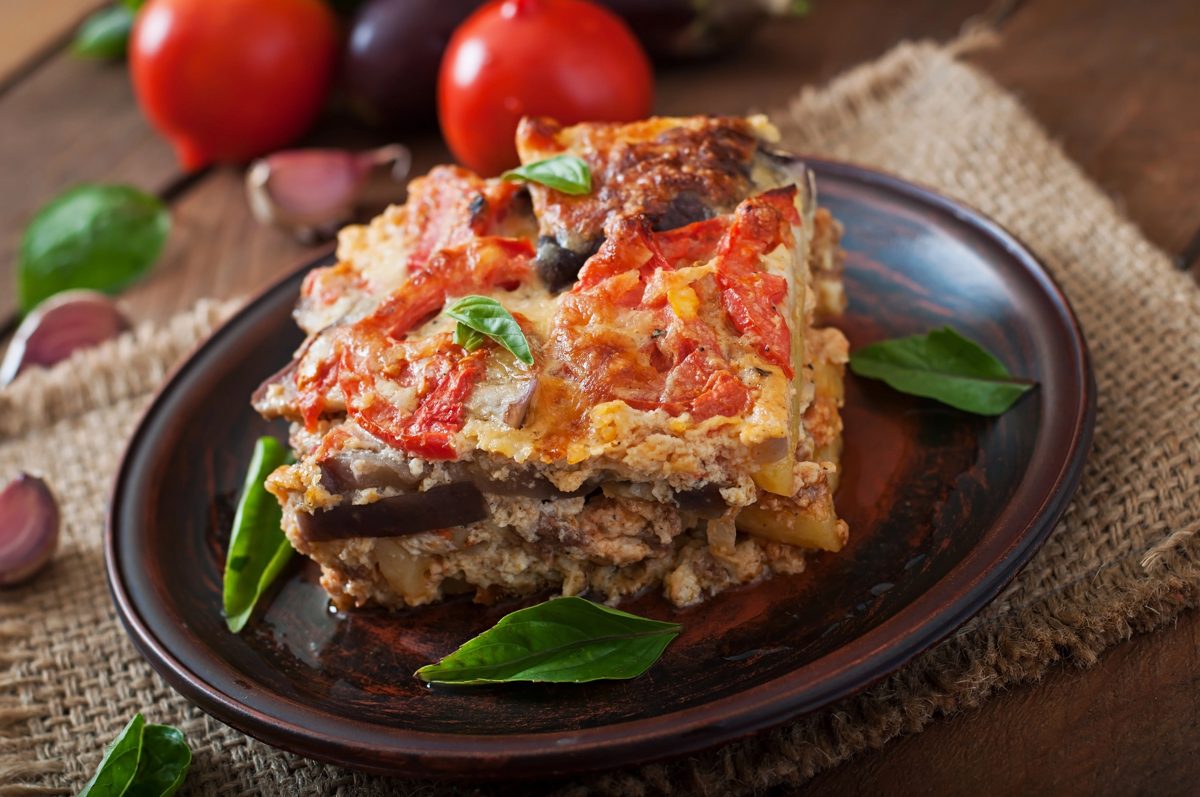
Greek moussaka layers eggplant, often over a base of potatoes, with ground meat simmered in tomato and a thick béchamel that bakes into a golden crust. The name may come from Arabic or Persian, and food writers still argue about the dish's roots in Ottoman and Middle Eastern cooking. The version Greeks know today is usually credited to Nikolaos Tselementes, the Sifnos-born chef who wanted to move Greek cooking away from its Eastern elements and topped the dish with French béchamel. The Athens newspaper To Vima calls that story probably wrong: an 1892 cookbook by Nikolaos Vasilakis already gave a béchamel version, under the name moussaka a la Turka.
Either way, moussaka was never everyday village food. It takes four cooking methods and more than twenty ingredients, and by the 1970s it had become a trademark of urban Greek cooking. It was among the first Greek dishes that foreign visitors met in the 1960s, and over time it came to dominate taverna menus. To Vima notes that it is at its best from late spring to autumn, when eggplants have the most flavor.
Serve it with a green salad and bread, and give it time to rest before cutting so the squares hold their layers.
This recipe contains alcohol. It is meant for adults of legal drinking age.
Ingredients and method
The full recipe, with US and metric measures and stand-ins for hard-to-find ingredients, is part of the Valentine's Day edition. Buy it once and keep the PDF.
Want to try first? Baci di Dama is free to cook.