Piernik
Polish spiced honey cake- Yield
- 1 cake (about 12 servings)
- Active
- 45 minutes
- Total
- 2 hours, plus resting overnight
- Difficulty
- Easy
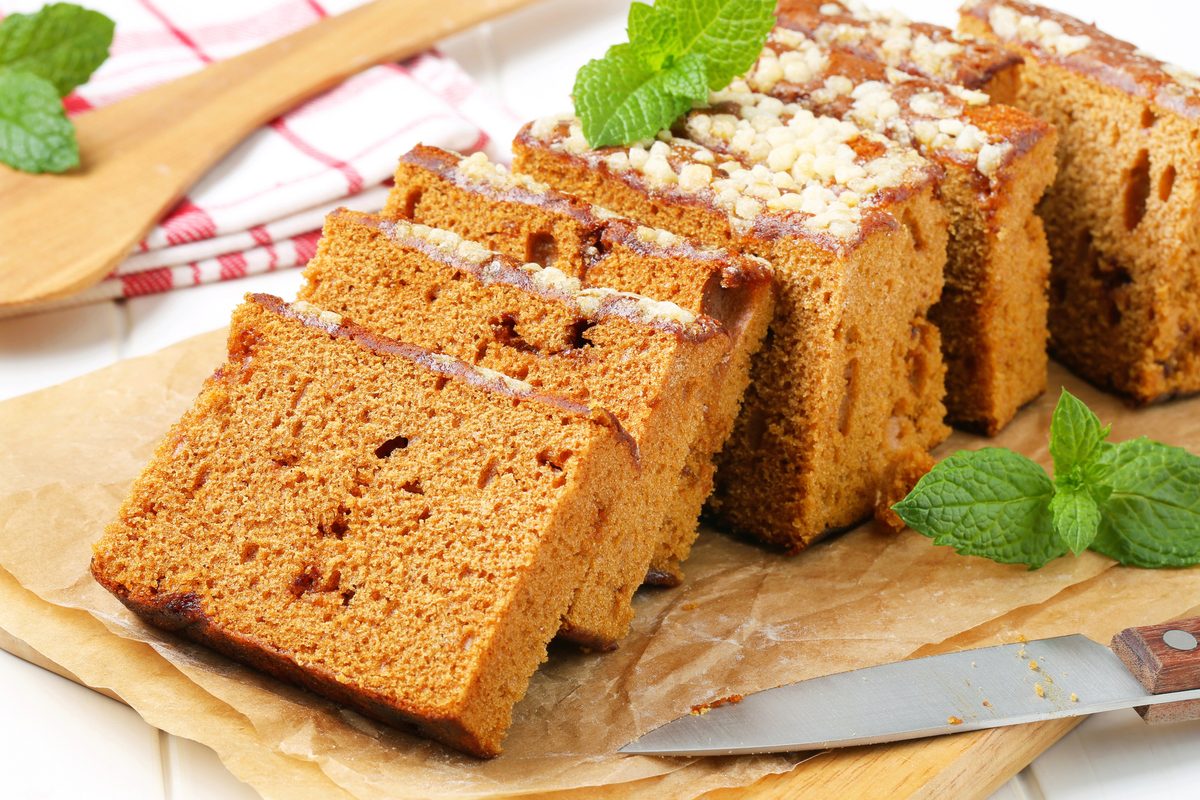
The story
Toruń has been called the capital of Polish gingerbread for centuries, and the company still operating under the name “Kopernik” goes back to 1763, making it one of the oldest continuously operating gingerbread factories in the world. The name piernik comes from the word pierny, “peppery” or “hot,” because the original medieval recipe called for a generous amount of pepper along with ginger, cinnamon, and cloves — spices that reached the city on the Vistula along the trade routes of the Hanseatic League. Toruń's museum holds more than 270 historic wooden molds for shaping piernik, in the form of gentlemen, hearts, and carriages, one of the best-known such collections in Poland. For Christmas, piernik is most often made as a moist, spiced cake spread with a layer of plum jam and often covered in chocolate glaze rather than as a hard cookie — a version that rests, tightly wrapped, for at least a day and traditionally several days after baking so that it softens and grows ever more aromatic, much like German Lebkuchen, with which it shares its origins in the same Central European trading world.
Ingredients and method
The full recipe, with US and metric measures and stand-ins for hard-to-find ingredients, is part of the Christmas edition. Buy it once and keep the PDF.
Want to try first? Zupa Grzybowa is free to cook.