Szaloncukor
Christmas tree fondant candy- Yield
- About 40 pieces
- Active
- 1 hour
- Total
- 2 hours, plus setting time
- Difficulty
- Advanced
The story
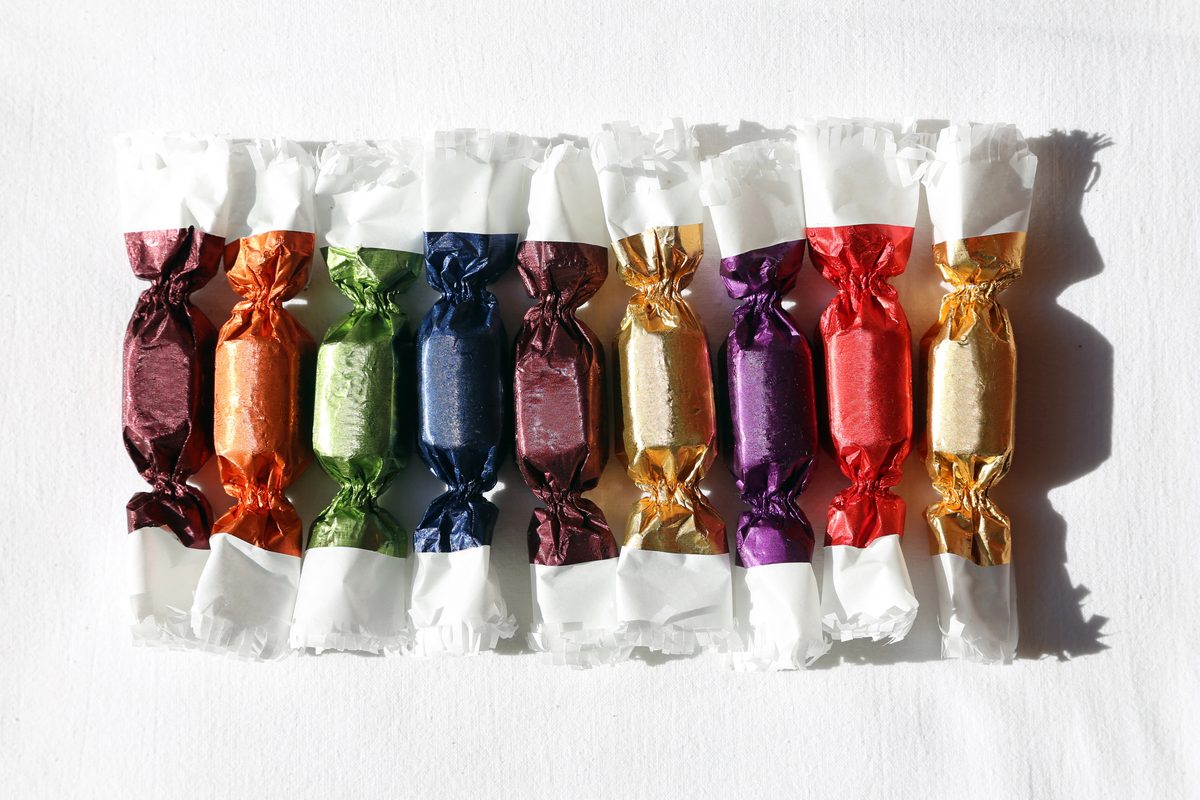
Szaloncukor, wrapped fondant candies used to decorate the branches of the Christmas tree, takes its name from the words “szalon” (the salon, the aristocratic drawing room where the first Christmas trees were displayed in the 19th century) and “cukor” (sugar), a reminder that this candy was originally a luxury available only to the wealthiest Hungarian families. The turning point came in the last decades of the 19th century, when Budapest manufacturers such as Frigyes Stühmer, a confectioner of German descent who set up his business in 1868, turned to machine production and gradually put szaloncukor within reach of the middle class. Today Hungarian households mostly buy it ready-made, at every price point from cheap supermarket versions to luxurious handmade candies from well-known makers, and it is in stores as early as October. There is also a little game familiar to many Hungarian families: children (and often adults) quietly unwrap a candy on the tree, eat what is inside, and then put the empty wrapper back on the branch so no one will notice, a small, good-natured deception that goes on from Christmas Eve, when the tree is decorated, until Epiphany, when it comes down.
Ingredients and method
The full recipe, with US and metric measures and stand-ins for hard-to-find ingredients, is part of the Christmas edition. Buy it once and keep the PDF.
Want to try first? Mákos Guba is free to cook.